
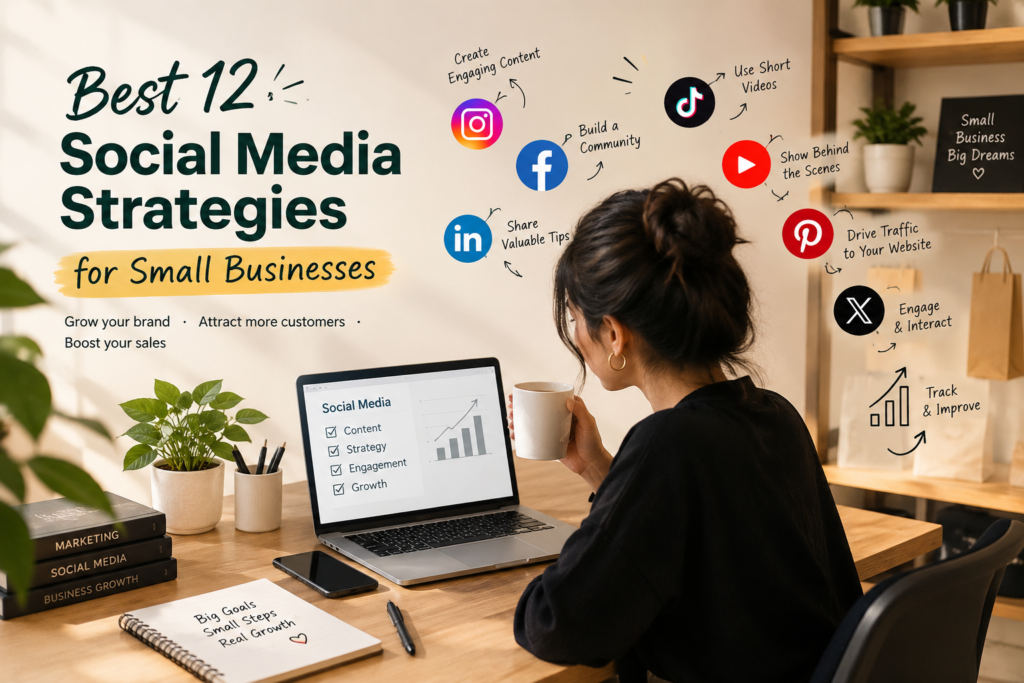
Social media has become one of the most powerful and affordable marketing tools available to small businesses. Unlike traditional advertising, social media allows businesses to communicate directly with customers, build relationships, showcase their products or services, and increase brand awareness without requiring a large marketing budget. However, simply creating accounts and posting occasionally is not enough. Small businesses need a clear strategy to make their social media efforts effective.
The first step in developing a successful social media strategy is deciding what the business wants to achieve. Different businesses may have different objectives. For example, a new business may want to increase brand awareness, while an established business may focus on generating sales or retaining existing customers.
Common social media goals include:
- Increasing brand awareness
- Attracting new customers
- Increasing website traffic
- Generating leads and sales
- Building customer loyalty
- Improving customer service
- Establishing expertise in a particular industry
Best 12 Social Media Strategies for Small Businesses ,Goals should be specific and measurable. Instead of saying, “We want more followers,” a business could aim to gain 500 relevant followers in three months or generate 50 website enquiries through social media. Clear goals make it easier to measure progress and determine which strategies are working.
2. Identify the Target Audience
One of the biggest mistakes small businesses make is trying to appeal to everyone. Effective social media marketing begins with understanding the ideal customer.
Businesses should consider factors such as age, location, occupation, interests, purchasing habits, problems, and preferences. For example, a local fitness studio might target young adults interested in health and exercise, while a home-based bakery might focus on families and people looking for customized cakes.
Best 12 Social Media Strategies for Small Businesses ,Understanding the audience helps businesses choose the right platforms, language, content style, and posting times. It also makes advertisements more effective because businesses can target people who are most likely to become customers.
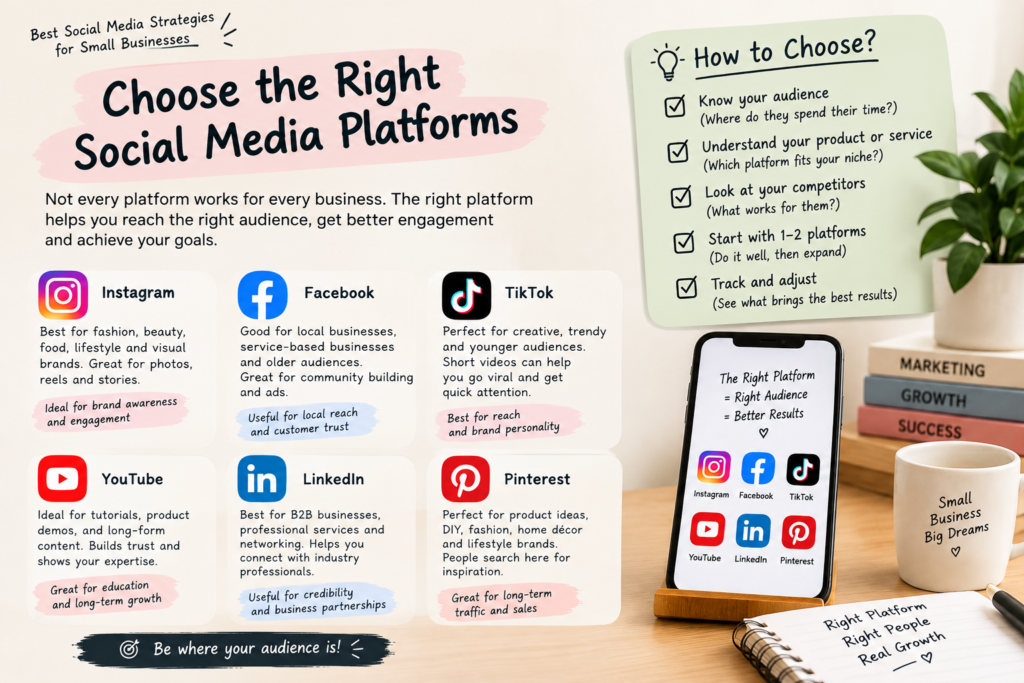
Best 12 Social Media Strategies for Small Businesses do not need to be active on every social media platform. Managing too many accounts can waste time and reduce content quality. Instead, businesses should concentrate on platforms where their target customers are most active.
For visually focused businesses such as restaurants, fashion stores, beauty salons, and handmade-product sellers, platforms such as Instagram and TikTok can be particularly useful. Businesses that sell professional services may benefit more from LinkedIn, while Facebook can be valuable for local communities, groups, and a broad range of customers.
The goal should be quality rather than quantity. It is better to maintain two social media accounts consistently than to create six accounts that are rarely updated.
4. Create Valuable and Engaging Content
Content is at the heart of social media marketing. Businesses should avoid making every post a direct advertisement. People generally respond better to content that is useful, entertaining, educational, or inspiring.
A small business can use several types of content:
- Product demonstrations
- Educational tips
- Behind-the-scenes videos
- Customer testimonials
- Frequently asked questions
- Before-and-after content
- Tutorials and how-to videos
- Industry news and insights
- Polls and questions
- Special offers and announcements
Best 12 Social Media Strategies for Small Businesses For example, a small coffee shop could post videos showing how its drinks are prepared, introduce employees, share coffee-making tips, and highlight customer favorites instead of posting only promotional messages.
A useful approach is to follow the “80/20” principle: most content should provide value or encourage engagement, while a smaller portion can focus directly on selling.
5. Use Short-Form Video
Short-form video has become an important part of social media marketing. Videos can capture attention quickly and allow businesses to demonstrate products, explain services, and communicate their personality.
Best 12 Social Media Strategies for Small businesses do not necessarily need expensive cameras or professional production. A smartphone, good lighting, clear audio, and a simple idea can be enough to create effective content.
For example, a clothing store can create a short video showing three ways to style one item. A restaurant can show the preparation of a popular dish. A service business can answer a common customer question in a 30-second video.
The key is consistency and authenticity rather than perfection.
6. Maintain a Consistent Brand Identity
A recognizable brand makes a business easier to remember. Social media profiles should have a consistent visual and verbal identity.
Businesses should use similar colors, fonts, logos, photography styles, and tone of voice across their platforms. Their profile information should also clearly explain what they offer and how customers can contact them.
Best 12 Social Media Strategies for Small Businesses,Consistency does not mean every post must look identical. Instead, customers should be able to recognize that different pieces of content come from the same business.
7. Engage With Customers
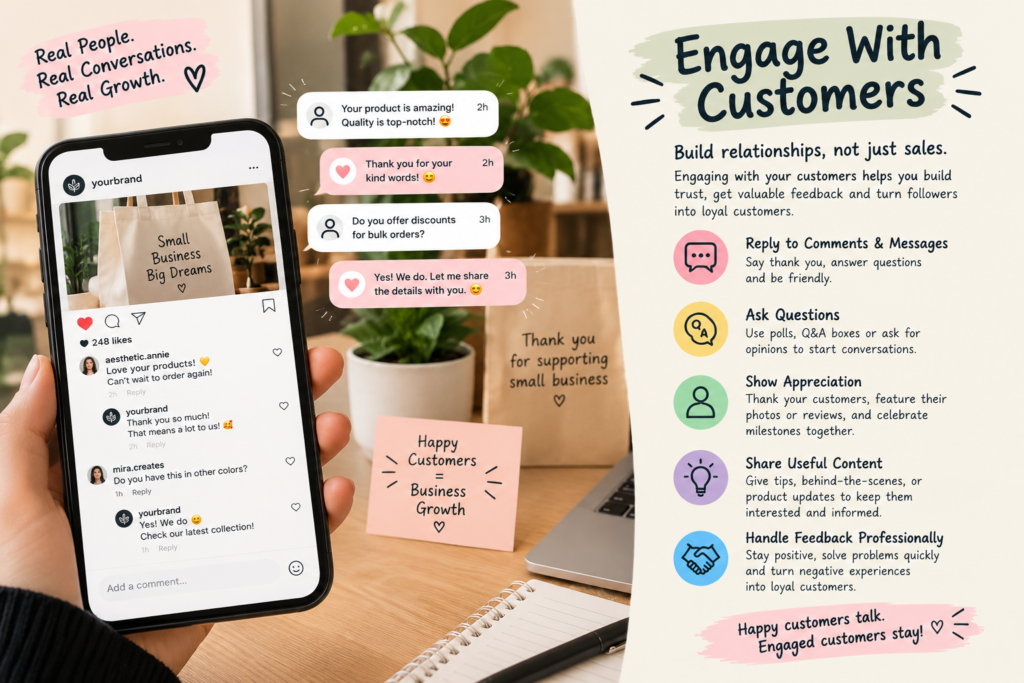
Social media should be treated as a conversation rather than a broadcasting channel. Small businesses have an advantage over large corporations because they can often provide more personal communication.
Businesses should respond to comments, messages, reviews, and questions promptly and professionally. They can also encourage interaction by asking questions, conducting polls, responding to customer comments, and sharing user-generated content.Best 12 Social Media Strategies for Small Businesses
When customers feel heard and appreciated, they are more likely to develop a positive relationship with the business and recommend it to others.
8. Encourage User-Generated Content
Customer-generated content can be one of the most valuable forms of social proof. Businesses can encourage customers to share photos, videos, reviews, or experiences involving their products.
For example, a restaurant could encourage customers to tag the restaurant in their food photographs. A clothing business could invite customers to share pictures wearing its products.
Best 12 Social Media Strategies for Small Businesses,With permission, businesses can repost this content on their own social media accounts. This provides authentic material while showing potential customers that real people are using and enjoying the products or services.
9. Use Local Marketing
For small businesses that depend on customers from a specific geographic area, local social media marketing is especially important.
Businesses can mention their city or neighborhood in relevant posts, use location features, participate in local conversations, collaborate with nearby businesses, and create content related to local events.
Best 12 Social Media Strategies for Small Businesses,Partnerships with local influencers or complementary businesses can also help reach new audiences. For example, a small bakery could collaborate with a local event planner or wedding photographer.
10. Use Paid Advertising Strategically
Organic social media content can be effective, but paid advertising can help small businesses reach a larger and more targeted audience.
Best 12 Social Media Strategies for Small Businesses,Instead of spending a large amount immediately, businesses should start with a small budget and test different advertisements. They can compare different images, videos, messages, audiences, and offers to determine what performs best.
Best 12 Social Media Strategies for Small Businesses,Paid campaigns should have a specific purpose, such as generating enquiries, promoting a special offer, increasing website visits, or selling a particular product. Businesses should track the results rather than judging success only by likes or impressions.
11. Create a Content Calendar
Consistency is easier when businesses plan their content in advance. A simple monthly or weekly content calendar can identify what will be posted, when it will be posted, and which platform will be used.
For example, a weekly schedule could include:
- Monday: Educational tip
- Wednesday: Product or service demonstration
- Friday: Customer testimonial
- Saturday: Behind-the-scenes video
- Sunday: Interactive question or poll
Best 12 Social Media Strategies for Small Businesses,A content calendar reduces last-minute stress and helps businesses maintain a balanced mix of promotional and valuable content.
12. Track Performance and Improve

A social media strategy should constantly evolve. Businesses should regularly review analytics to understand which content attracts attention and produces results.
Best 12 Social Media Strategies for Small Businesses,Important metrics include engagement rate, reach, profile visits, website clicks, enquiries, leads, conversions, and sales. The most important metric depends on the business’s objective.
For example, a post receiving thousands of views may appear successful, but if the goal is generating sales and the post produces no enquiries, its business value may be limited.
Businesses should experiment with different content formats and use performance data to improve future campaigns.
Conclusion
Social media provides small businesses with an opportunity to compete for attention without requiring the enormous marketing budgets of large companies. However, success depends on having a focused and consistent strategy.
Best 12 Social Media Strategies for Small Businesses,The most effective approach is to define clear goals, understand the target audience, select the right platforms, create valuable content, use short-form video, maintain a consistent brand identity, engage with customers, encourage user-generated content, focus on local opportunities, use paid advertising carefully, and regularly analyze performance.
Most importantly, small businesses should remember that social media is about relationships, not simply follower counts. A smaller audience that trusts, engages with, and purchases from a business can be much more valuable than a large audience with little interest in what the business offers. By staying consistent, authentic, and cust
author shibina https://shibina.in/